The Summer Slump - What to Do When Business Gets Quiet (And How to Set Yourself Up for a Strong Fall)
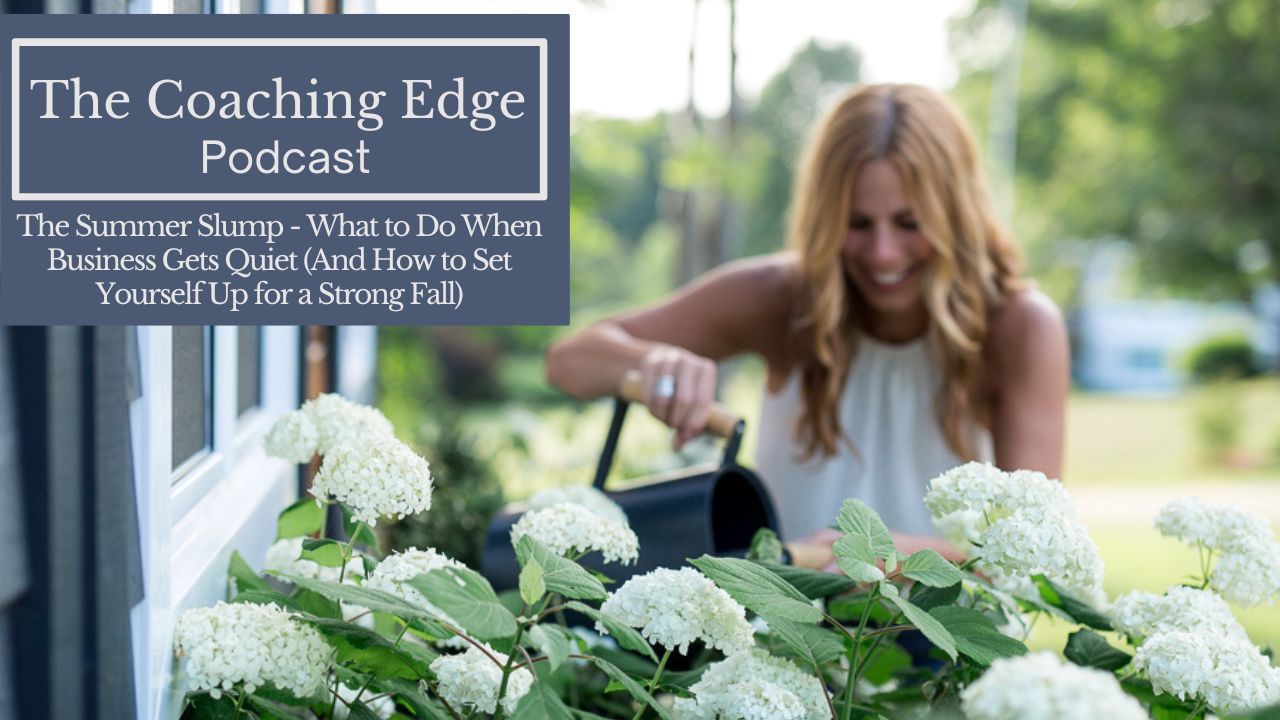
It's mid-summer. Your inbox is quieter than usual. Discovery calls have slowed down. Half your audience seems to be on vacation — and honestly, you'd like to be too.
If you're feeling the summer slump, you're not alone. This time of year can feel unsettling for coaches, especially if you're used to measuring your worth by how busy you are. But here's what I've learned after 15 years in this business: summer isn't a problem to fix. It's an opportunity to use.
The coaches who come into fall with momentum aren't the ones who panicked and hustled all summer. They're the ones who used the slower season strategically — to rest, plan, create, and prepare.
This episode is a practical guide to making the most of summer without burning out or manufacturing fake urgency. I'm walking you through exactly what to focus on now so September doesn't catch you off guard.
In this episode, I cover:
- Why summer slows down (and why that's not a sign your business is failing)
- The danger of panicking a ...
Spring Cleaning Your Coaching Business-A Practical Reset for Q2
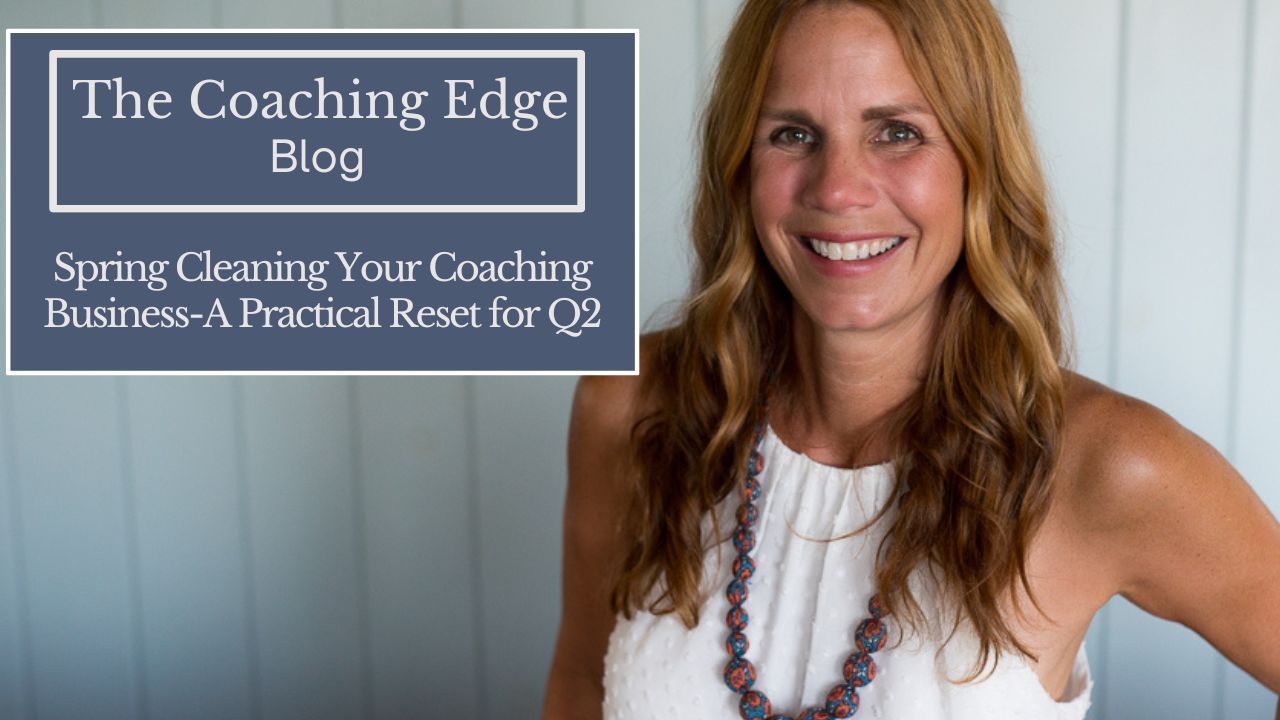
I'm in the middle of moving houses, and it's forced me to do something I'd been avoiding for way too long — clean out my office. Two years of accumulated papers, old workshop materials, client files from programs I'd half-forgotten about. And as I sorted through fifteen years of coaching work, I realized something kind of wonderful: I've worked with thousands of people. That felt amazing to see. But you know what felt even better? Getting it all cleaned out and ending up with a clear desk, organized files, and a brain that finally had some breathing room.
If your coaching business has been accumulating clutter — physical, digital, or strategic — this episode is your invitation to do the same. We're going beyond tidying your desk (though we'll cover that too) and into the deeper work of auditing your offers, revisiting your pricing, cleaning up your systems, and making sure everything in your business is still aligned with where you're headed.
In this episode, I cover:
- Why simplify ...
Partnering for Success: How to Avoid Coaching Collaboration Mistakes
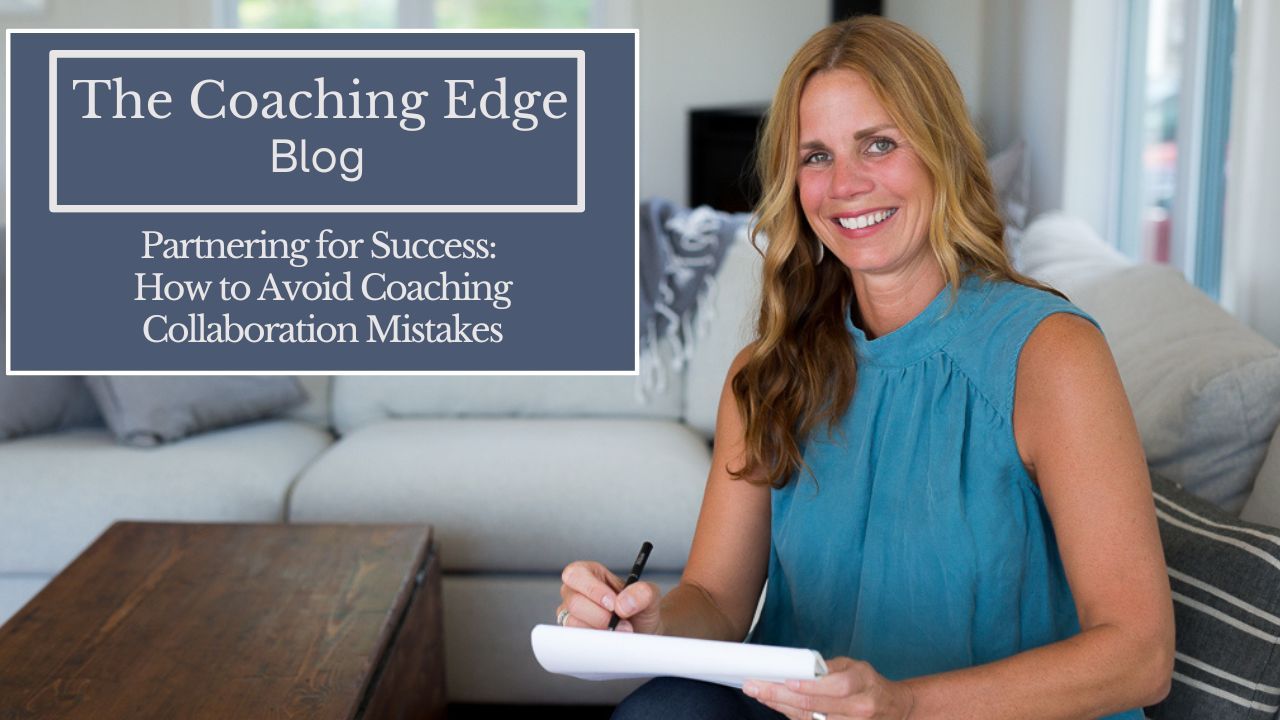
Welcome back to The Coaching Edge! In this episode, we dive into the dynamic world of collaborative coaching and partnerships. Whether you're a seasoned coach or just starting out, understanding how to effectively collaborate can elevate your practice and expand your reach. We’ll explore the incredible benefits of joining forces with other coaches, as well as the potential risks that can come with it. I’ll share personal stories, actionable insights, and essential questions to consider before entering into any partnership.
Collaboration isn’t just about sharing responsibilities; it’s about leveraging each other’s strengths to create something truly unique. From co-creating programs to guest coaching in different communities, the opportunities are endless! But before you jump into partnership, make sure you're asking the right questions. Tune in to discover how to navigate this exciting journey with confidence.
In this episode, we cover:
- The benefits of leveraging audiences and com ...
Why I Switched from ChatGPT to Claude (And Got Scammed Along the Way): Embracing AI in Coaching

I have a confession to make. I almost published an entire podcast episode about switching to Claude... only to discover I'd been using a scam platform called Chatly the whole time. Not my finest moment — but honestly, it turned into one of the most valuable lessons I've learned about navigating AI as a coach.
In this episode, I'm sharing the whole story: what happened, what I got wrong, and what I've learned now that I'm actually using the real Claude. I'm also diving into why I made the switch from ChatGPT in the first place, what's genuinely different about the two platforms, and how you can make the transition yourself if you're curious.
Here's what I'm covering:
- The Chatly scam and why I'm sharing this story (hint: you might be next if you're not careful)
- Anthropic's ethical principles and why they matter to me as a coach
- The real differences between Claude and ChatGPT — what's actually true vs. what I thought was true
- How to move to Claude without falling for third-party s ...
Why “Overdelivering” is not “Great Coaching”: It’s Not Helping You or Your Clients

Overdelivering in your coaching practice can feel generous. Responsible. Even strategic.
You answer messages quickly.
You send detailed follow-up notes.
You offer, “Just text me anytime.”
You throw in extra resources, worksheets, bonuses.
And yet… you’re exhausted.
In this episode, I’m talking about the subtle but important difference between being deeply supportive as a coach and over-giving in a way that leads to coaching burnout, resentment, and client dependence.
I see this all the time — especially with newer coaches who are still building confidence in their pricing and in the value of their coaching sessions. Overgiving often sneaks in under the banner of “good coaching.”
But here’s the truth:
Overdelivering is usually a confidence issue — not a value issue.
Adding unlimited access, constant follow-up emails, late-night responses, or elaborate session summaries does not increase the value of your coaching. The value is created inside the coaching session itself.
In this epi...
When Marketing Feels Gross - 10 Things I Don’t Do in My Coaching Business (And Why)

If marketing feels heavy, awkward, manipulative, or exhausting… it’s probably not because you’re bad at marketing.
It’s probably because you’re trying to follow a strategy that doesn’t match your values.
In this episode, I’m pulling back the curtain and sharing what values-based marketing actually looks like inside my own coaching business. I’m walking you through 10 things I don’t do — and why.
This isn’t about being moral or superior.
It’s about being congruent.
Because when your marketing aligns with your personal and professional values, everything gets simpler. Decisions get cleaner. Boundaries get easier. And you stop resenting your own strategy.
I share:
- Why I don’t coach in niches I haven’t personally lived
- Why I waited a full year post-separation before supporting women through divorce
- Why I don’t manufacture urgency or use pressure-based launch tactics
- Why I don’t overprice just because I can
- Why I ditched ManyChat (even though it worked)
- Why I don’t automate inti ...
What To Do When a Coaching Session Goes Off-Script (and Why That's OK)

There’s a moment every coach knows.
You’re mid-session.
Your client says something unexpected.
The conversation shifts — emotionally, directionally, energetically.
And suddenly, you feel it:
I don’t know what to do next.
In this episode, I’m talking about why that moment isn’t a coaching failure — and why, in many cases, it’s actually a sign that you’re doing real, meaningful work.
We’re unpacking the fear that lives underneath “not knowing,” why so many coaches panic when sessions don’t go as planned, and how much of that anxiety comes from holding an unspoken agenda about where the session should go.
I also explore the difference between agenda-driven, outcome-focused coaching and curiosity-driven, co-active coaching — and why letting go of the need to steer your client toward a specific insight, solution, or action often creates far more powerful results.
This is a conversation about trust.
Trusting the process.
Trusting your client.
And trusting yourself as a coach — even (and espe...
Be Yourself (On Purpose) Why Real Talk Is Your Most Powerful Coaching Business Strategy
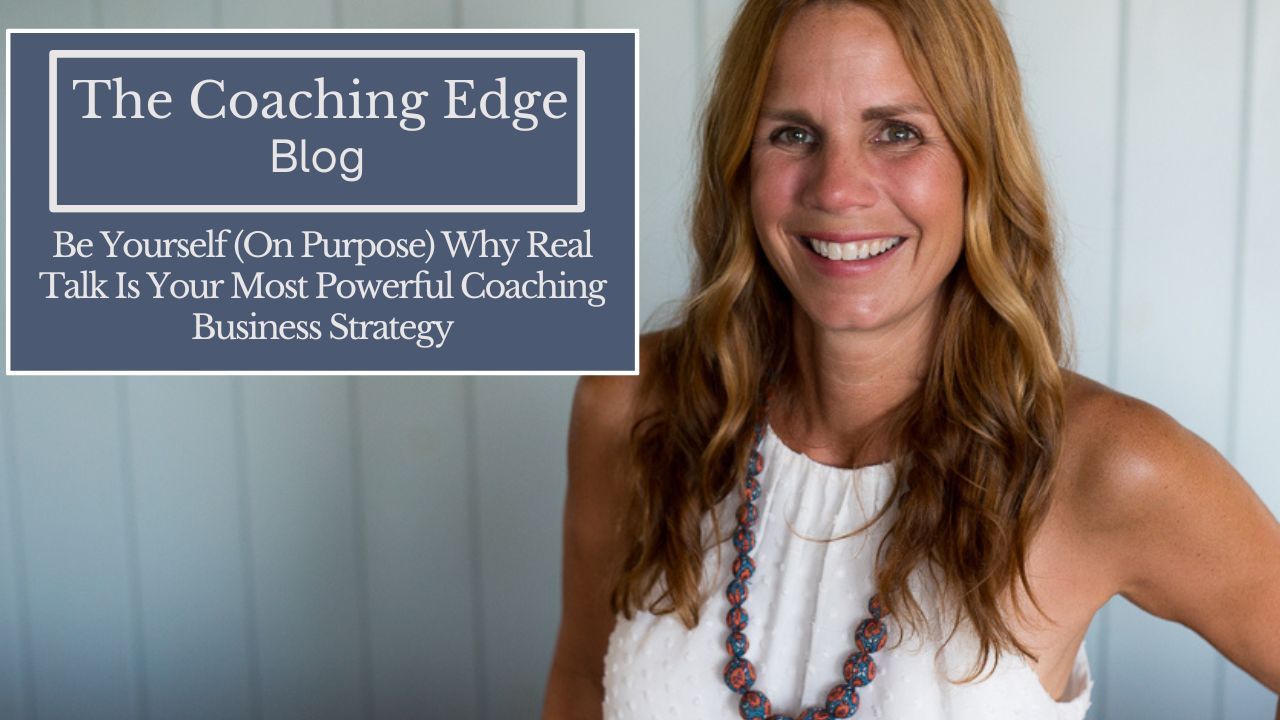
If there’s one thing I’ve learned after more than 15 years of running a coaching business, it’s this: being yourself is not a nice-to-have. It’s the strategy.
And yet… even now, I still catch myself getting pulled toward polishing amd perfecting.
I look around at what other people are doing.
I see beautifully produced content, perfectly worded posts, slick frameworks.
And my very human brain thinks, “Maybe I should be doing it like that.”
That pull never really goes away.
It’s part shiny object syndrome, part comparison, part wanting to get it “right.”
This episode is my reminder — and hopefully yours — that Real Talk has always been part of my brand, and that every time I drift away from it, I feel less aligned, less grounded, and honestly… less effective.
This podcast itself is a perfect example.
If you’re here listening, it’s not because everything I say is perfectly packaged. It’s because the way I speak, teach, and show up works for you. It feels familiar. It feels honest. It f...
What to Do When Your Coaching Offers Aren't Selling (Without Spiraling or Scrapping Your Coaching Business)
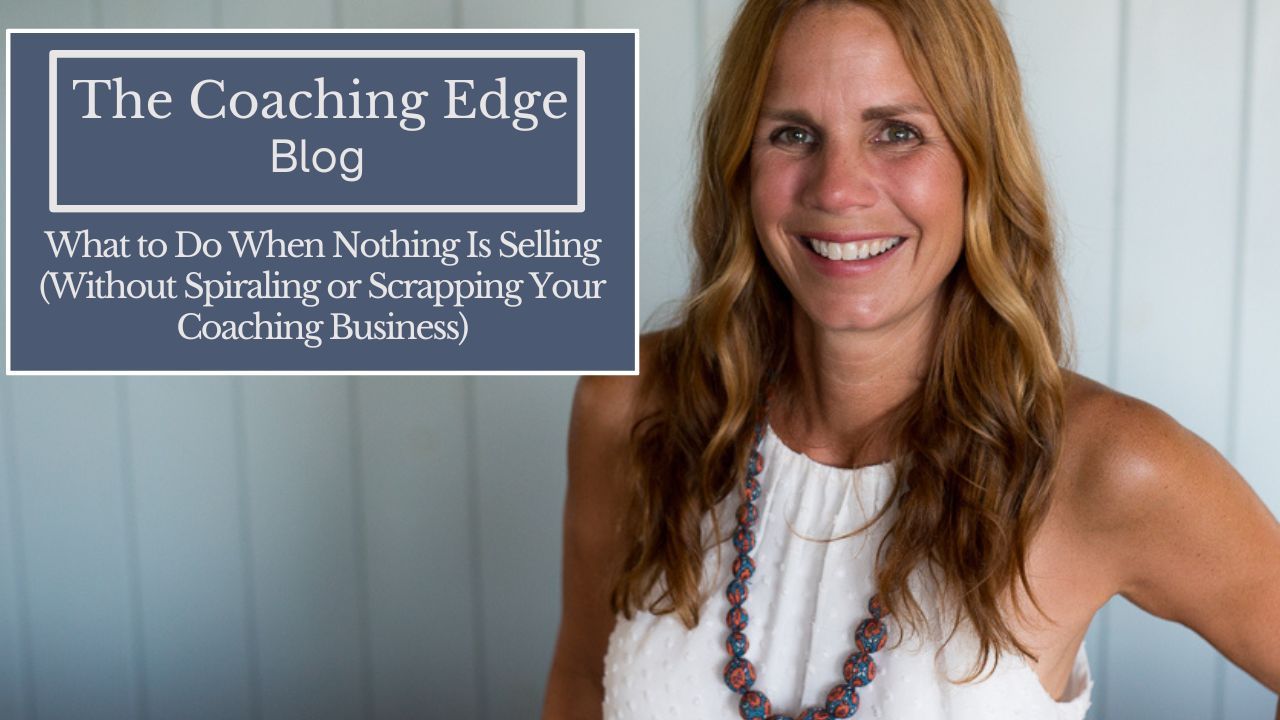
Let’s talk about that moment every coach hits at some point — when nothing is selling.
The launch flops.
The offer lands with a thud.
The inbox is quiet.
And suddenly your brain starts telling some very convincing (and very dangerous) stories about what that means.
In this episode of The Coaching Edge and the accompanying free Offer Diagnostic Worksheet (download HERE), I walk you through what to do before you panic, deep-six your offer, or decide you’re “just not cut out for this” and call it quits. Because when nothing is selling, the problem is almost never that you’re a bad coach — and believing that can send you straight into a spiral that’s hard to climb out of.
Instead, I share how I diagnose sales problems using my Business Compass model, how to identify what’s actually broken in your sales chain, and what to focus on first so you can get things moving again — calmly, strategically, and without burning your business down.
In this episode, I cover:
- The most dangerous assum ...
2026 Goal Setting for Coaches: A New Framework that Actually Works (Without Burning Out)

Let me help you rethink goal-setting for 2026 by introducing a different kind of goal — one that makes your business more flexible, sustainable, and profitable.
Most coaches set behaviour-based goals:
• post 3x/week
• hit $10K/month
• grow the list by 1,000
• convert 60% of discovery calls
But here’s the truth: behaviour-based goals require perfection… and perfection is not a thing any of us are capable of maintaining.
Instead, I want to teach you how to set feeling-based goals — goals that clarify how you want to feel in your business: confident, grounded, spacious, consistent, organized, aligned.
These goals aren’t fluffy. They’re strategic.
They are what actually move the needle in your business.
When you feel more confident, you have more sales conversations.
When you feel more grounded, your messaging becomes clearer.
When you feel more organized, your systems improve — creating more capacity.
When you feel more aligned, you show up consistently — which leads to more clients and more...
Author & Host

Wendy McCallum
Business Coach for Coaches, Burnout & Alcohol Coach for High Achievers
I’m Wendy McCallum — a coach, mentor, and former lawyer who’s spent the last 15 years helping people build lives and businesses they actually want to wake up to. When I first left law, I had no guidebook for how to do this coaching thing. I floundered — hard. I undercharged, overthought, and overinvested in shiny solutions that didn’t really move the needle. But every mistake taught me something, and eventually, I built the kind of coaching practice I once only dreamed about — one that’s profitable, sustainable, and full of work I truly love. Today, I coach two kinds of people: ✨ Busy professionals who are ready to make big, meaningful changes — whether that's finding balance, recovering from burnout, or rethinking their relationship with alcohol. ✨ And newer coaches who are building their businesses from the ground up and want a clear, sustainable path forward without all the gimmicks and noise. Whether I’m helping someone simplify their business or reclaim their personal life, the heart of my work is the same: giving smart, capable people the clarity, encouragement, and real-world tools they need to move forward — in a way that feels good, not overwhelming. If you’re ready for something better — in your work, your life, or your business — you’re in the right place. And I’m so glad you’re here. IMPORTANT: Blog content including Wendy's podcasts are for information purposes only and not intended in any way to be health advice. Please see full Terms of Use, by clicking on the link in the footer of this page, for details.
Join my List and Grab Your Free Discovery Calls That Convert Template for Coaches!
Recent Posts
